
7 Costs That Make Up a Real Roof Replacement Bid
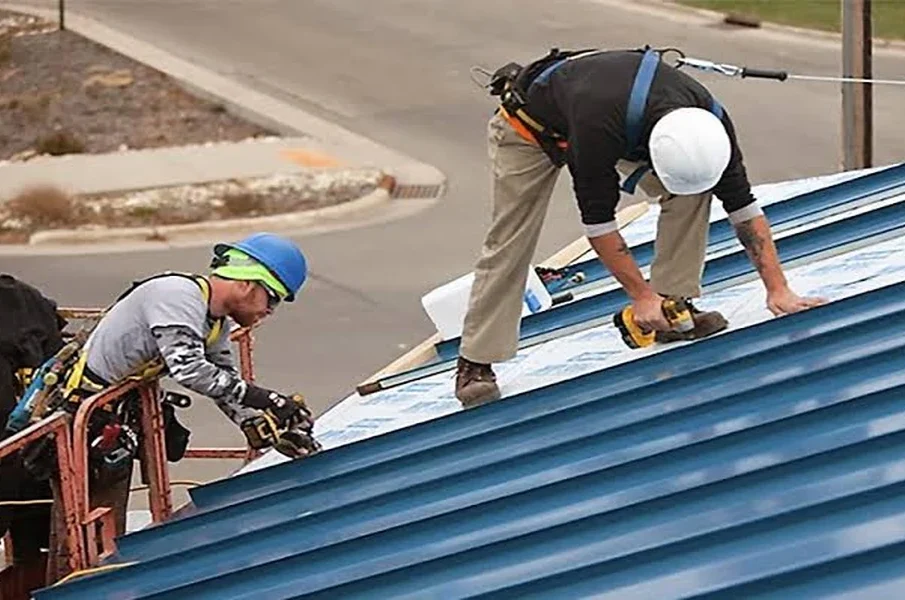
A roof-replacement quote can look deceptively simple. One contractor may provide a single total, while another breaks the same project into tear-off, decking, underlayment, flashing, ventilation, materials, labor, permits, and disposal. The difference is important because the cheapest number is not always based on the same scope of work.
Homeowners in Birmingham also need to account for local permitting and contractor requirements rather than comparing shingle prices alone. The City of Birmingham states that its Permitting and Inspection Division processes building permits and enforces adopted building codes within city limits, while Alabama maintains specific licensing rules for residential roofing contractors.
For homeowners comparing exterior work beyond the roof itself, a Roofing Company in Birmingham such as HK Construction can review roof replacement or repair alongside gutters, siding, storm restoration, painting, decks, fences, and insurance-claim assistance. That broader scope can be useful when damage affects several connected exterior components rather than only the shingles. The practical question to ask is not simply, “What is the total?” but, “Which parts of the building are included in that total?”
A complete roofing bid is easier to evaluate when the price is separated into the major cost centers below.
| Cost area | What typically drives the amount | Why estimates can differ |
|---|---|---|
| Tear-off and disposal | Roof size, layers, access, landfill fees | Extra layers or difficult access increase labor |
| Deck repairs | Number and size of damaged sheets | Damage may not be visible until tear-off |
| Roofing materials | Product line, warranty level, waste factor | Premium shingles and accessories cost more |
| Underlayment and water protection | Material type and coverage | Enhanced membranes add cost |
| Flashing and penetrations | Chimneys, walls, valleys, vents | Complex roofs require more custom work |
| Labor and safety | Pitch, height, layout, crew size | Steep or complicated roofs take longer |
| Permits and project overhead | Local requirements, supervision, warranty | Contractors structure overhead differently |
1. Tear-Off and Disposal Can Be a Major Labor Charge
Removal cost. The first meaningful expense may occur before any new roofing material reaches the house. Existing shingles must usually be stripped, carried to the ground, loaded, transported, and disposed of.
A simple one-layer roof with easy driveway access is cheaper to remove than a roof with two existing layers, steep slopes, landscaping obstacles, or limited space for a dumpster. Contractors may price removal by roofing square, by labor hours, or as part of a combined installation rate.
Disposal cost. Old shingles are heavy. Disposal fees therefore depend partly on total debris weight and local landfill or transfer-station charges. Nails, underlayment, damaged flashing, ridge materials, and deteriorated decking add to the load.
If one estimate includes complete removal and another assumes installation over an existing layer where permitted, the totals are not directly comparable.
2. Roof Deck Repairs Are the Biggest Unknown
Decking allowance. Plywood or oriented strand board beneath the roofing system must provide a sound fastening surface. Water leaks, prolonged moisture exposure, poor attic ventilation, or earlier installation problems can leave portions soft, swollen, delaminated, or deteriorated.
This cost is difficult to predict perfectly before the roof covering is removed. A detailed estimate should therefore explain how replacement decking is priced if hidden damage is discovered.
Why it matters. Installing new shingles over compromised sheathing does not correct the structural problem underneath. IBHS resilience guidance places considerable importance on roof-deck attachment because wind loads act through the entire roof assembly, not merely through the visible covering.
A very low estimate with no decking language may simply leave a cost unresolved until work begins.
3. Shingles Are Only Part of the Material Bill
Field material. Asphalt shingles usually account for a substantial share of material spending, but contractors must order more than the exact measured roof area. Valleys, hips, ridges, starter courses, cutting waste, and complex geometry create additional material requirements.
Accessory material. A complete system can also require starter shingles, ridge caps, fasteners, drip edge, pipe boots, sealants, flashing, ventilation components, and underlayment.
Two bids can therefore specify the same shingle brand while still containing very different material packages.
Product rating also matters. IBHS notes that asphalt shingles can be evaluated under standardized wind-resistance procedures such as ASTM D3161 and ASTM D7158. Those classifications help distinguish tested performance rather than relying only on appearance or marketing terminology.
4. Underlayment and Water Protection Change the Price
Basic underlayment. Underlayment sits between the roof deck and the primary covering. Its cost depends on material selection, fastening method, total coverage, and whether enhanced water-protection measures are included.
Enhanced protection. More resilient assemblies may use self-adhered membranes, taped sheathing joints, or other approaches intended to reduce water entry if shingles are damaged.
IBHS reports that sealing the roof deck can reduce water intrusion substantially during severe weather and incorporates sealed-deck measures into its FORTIFIED recommendations.
These upgrades increase the initial contract amount, so a bid containing stronger secondary water protection should not be compared solely on final price with a bid using a basic minimum assembly.
5. Flashing and Roof Details Add Precision Labor
Flashing. Valleys, walls, chimneys, skylights, plumbing vents, and roof transitions require careful water-management details. These areas generally involve more cutting, fitting, sealing, and installation time than uninterrupted roof surfaces.
A simple gable roof may therefore cost less per square than a smaller roof containing several valleys, dormers, sidewalls, and penetrations.
Replacement versus reuse. Homeowners should check whether a bid includes new flashing or assumes some existing metal will remain. Reusing suitable components may lower the contract price, but deteriorated or incorrectly installed flashing can compromise a new roof.
This is one area where a line-item description reveals far more than a headline project total.
6. Labor Reflects Difficulty, Not Just Square Footage
Roof pitch. A steeper roof typically requires slower movement, additional fall-protection procedures, more staging, and greater handling effort.
Height. A one-story ranch and a three-story house with the same roof area do not represent the same labor conditions.
Complexity. Hips, valleys, dormers, multiple elevations, roof-to-wall intersections, and restricted access all add installation time.
Crew quality. Labor pricing also reflects supervision, training, workers’ compensation, insurance, equipment, and the contractor’s ability to support callbacks and warranty obligations.
This explains why dividing every bid by roof square footage can produce a misleading comparison. Square footage matters, but installation difficulty determines how much labor is required to cover it correctly.
7. Permits, Insurance, Overhead, and Warranty Finish the Bid
Permits. Local administrative costs may appear as a separate line item or be included in overhead. Birmingham’s permitting department handles building permits and inspections for applicable work, so contractors need to account for the local process when required.
Licensing and business costs. Alabama’s Home Builders Licensure Board provides a specific residential roofers licensing path. It also states that an unlimited home-builder license qualifies a contractor to perform residential roofing without a separate roofers license, while a limited license does not.
Insurance and supervision. Contractor liability coverage, worker protection, office support, project management, equipment, vehicles, estimating, scheduling, and warranty administration all have to be funded somewhere in the price.
Profit. A legitimate estimate also contains profit. That is not automatically an unnecessary markup. Profit supports continued operations, warranty service, equipment replacement, training, and the contractor’s ability to remain available after installation.
The most useful roofing estimate is therefore not necessarily the one with the lowest bottom line. It is the one that makes the scope clear enough to understand what happens if decking is damaged, what water-protection system is included, whether flashing is replaced, how ventilation is handled, who manages permits, and which costs can change after work begins.
When bids are reviewed line by line, a large price difference often becomes easier to explain. One contractor may simply be charging more for the same work, but another may be including tear-off, upgraded underlayment, deck allowances, new flashing, permits, cleanup, and warranty coverage that a cheaper proposal leaves vague. Cost anatomy turns an estimate from a single number into a description of the roof that will actually be built.