
Walker Turner Tools: A Collector’s Guide to Vintage American Machinery
Title: Walker Turner Tools: A Collector’s Guide to Vintage American Machinery
Description: A practical guide to Walker Turner power tools – history, collector value, restoration, and where to find the original documentation for older machines.
Link: https://manualmachine.com/walkerturner/
Anchor: natural – “here”
Walker Turner made some of the most respected stationary power tools in American industrial history, and the machines that carry the Walker Turner name are still in active service decades after the company stopped building them. Drill presses, band saws, lathes, and other shop equipment from the 1930s through the 1950s were engineered with a quality of materials and precision that has made them genuinely collectible in the modern era. For owners and restorers of Walker Turner machinery, the biggest practical challenge is not the machines themselves, which often run beautifully with minimal attention. It is the documentation – original manuals, parts diagrams, and specification sheets that have become progressively harder to find as the decades have passed. This article covers what Walker Turner owners need to know in 2026, why these machines are worth restoring, and where the original documentation has survived.
A Short History of the Brand
Walker Turner operated from the early twentieth century until the brand was acquired and eventually discontinued by larger industrial corporations. The best-known Walker Turner equipment was produced during the company’s independent years and reflected the prevailing American industrial approach to machine tool design – cast iron construction, serviceable bearings, generous motor specifications, and a design philosophy that prioritized long service life over unit cost. This philosophy is why so many Walker Turner machines are still running in home shops and small fabrication facilities nearly a century later. The engineering has outlasted not only the original manufacturer but most of its successor brands as well.
Why Vintage Walker Turner Machines Are Worth Restoring
Restoring a vintage Walker Turner machine is not a purely sentimental exercise. A well-restored Walker Turner drill press or band saw often outperforms comparable modern equipment at similar or lower cost points, because the original casting quality, spindle design, and motor specifications were genuinely excellent. The restoration investment typically pays back in the machine’s ongoing capability – smoother operation, better precision, and a service life that can reasonably be measured in additional decades rather than years. Collectors and working machinists both find that a restored Walker Turner machine is a real shop asset rather than a museum piece.
The Documentation Challenge for Older Tools
The harder part of owning or restoring Walker Turner equipment is sourcing documentation. Original operator manuals, parts diagrams, and exploded views were printed in relatively small quantities and distributed with the machines when they were new. Over ninety years of shop life, most paper copies have been lost, damaged, or discarded. The manufacturer itself no longer exists in any form that could republish the documentation, so the only remaining sources are enthusiast communities, archival projects, and dedicated manual preservation efforts. A good archive is often the single most useful resource for a Walker Turner restoration – you can find documentation here for a wide range of Walker Turner models, including operator manuals, parts lists, and exploded diagrams that are essential for proper restoration and ongoing maintenance. This kind of preserved documentation represents real historical continuity for a brand whose original commercial infrastructure has been gone for decades.
Identifying Your Specific Walker Turner Model
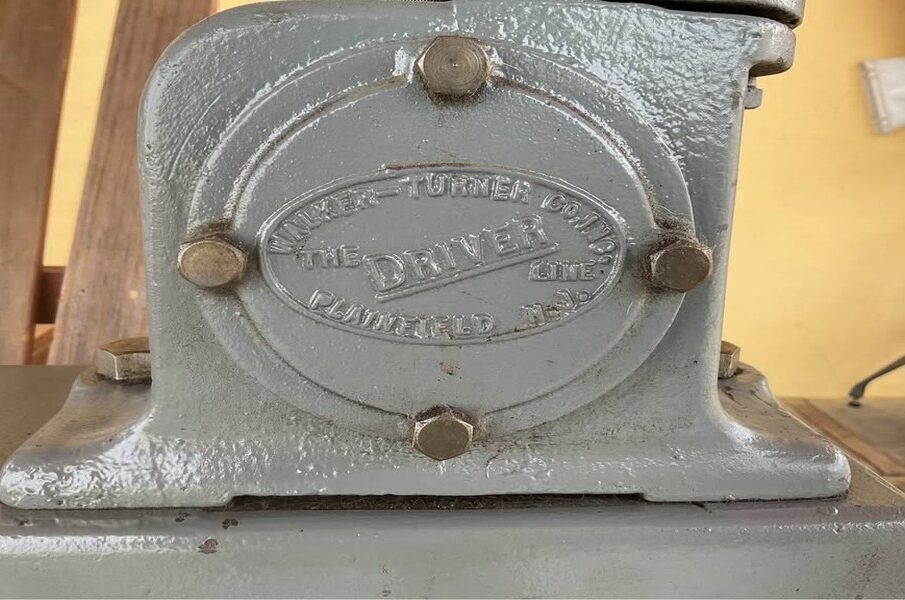
Walker Turner produced variants of the same machine type under slightly different model designations over the years, and the documentation for one variant does not always apply cleanly to another. The brass or aluminum nameplate on the machine typically identifies the specific model, production year, and sometimes the serial number. For drill presses, this plate is usually on the column or head casting. For band saws, it may be on the frame near the motor. For lathes, it is typically on the headstock. Recording this information accurately before beginning any research is the first step in a successful restoration project.
Common Restoration Priorities
Restoring a Walker Turner machine tends to follow a consistent order of priorities. Motor inspection and rewinding if necessary comes first, because the original motors are often salvageable but may have dried-out bearings or degraded insulation. Bearing replacement follows – most shaft bearings in Walker Turner equipment were standard sizes that remain available as modern replacements. Belt replacement, switch rewiring to modern safety standards, and removal of rust and old paint from cast surfaces come next. The parts diagrams in the original manuals are indispensable during this process, because they identify exact component locations and provide the spatial reference needed to avoid mistakes during reassembly.
The Walker Turner Collector Community
An active community of Walker Turner collectors, restorers, and working machinists has grown up around the brand, and this community is an underappreciated resource for owners of these machines. Forums dedicated to vintage American machinery regularly discuss specific Walker Turner models, share restoration progress, and occasionally surface documentation that nobody else has. For anyone taking on a significant restoration, spending time in these communities is almost as valuable as finding the documentation itself. The collective memory about which bearings are the right modern substitutes, which paint colors match the original factory finish, and which common failures to watch for is something that is not captured in any single document.
Keeping a Walker Turner Machine Running Long-Term
Once a Walker Turner machine is properly restored, keeping it running is not difficult. Regular lubrication of documented grease points, occasional belt inspection, and sensible operational care are usually enough to keep the equipment productive for decades more. The original manuals specify lubrication points and intervals, and modern synthetic greases and oils work well in these machines despite not being available when the manuals were written. Original oil weights can be translated to modern equivalents with a small amount of research, and the result is often a machine that operates better than it ever did in its original production environment. Walker Turner equipment represents the kind of industrial engineering that rewards patient ownership, and the documentation is what makes that ownership possible across the generations.
– – – – – – – – – –